
More Than a Hideout: Why Your Hamster Needs a Natural House
If you think a hamster house is just a cute accessory, think again. For your tiny burrower, a proper hideout is as essential as food and water. Without one, hamsters experience chronic stress, disrupted sleep, and anxiety. Let’s walk through what makes a truly good, natural home for your hamster.
Necessity – A Safe Place to Be a Hamster
Hamsters are prey animals. In the wild, they spend most of their daylight hours deep inside cool, dark burrows. A house gives them that same security: a place to sleep, hoard food, and escape bright light or sudden noises. No house = a constantly stressed hamster.
Material – Go Natural, Go Safe
Not all houses are equal. Best choices: untreated solid wood (aspen, birch), ceramic, cork bark, seagrass, or coconut shells. These materials are breathable, chew-safe, and mimic nature.
Da evitare: soft fabric (risk of intestinal blockage if chewed), pine/cedar wood (toxic phenols), and plastic (poor ventilation, dangerous if ingested).
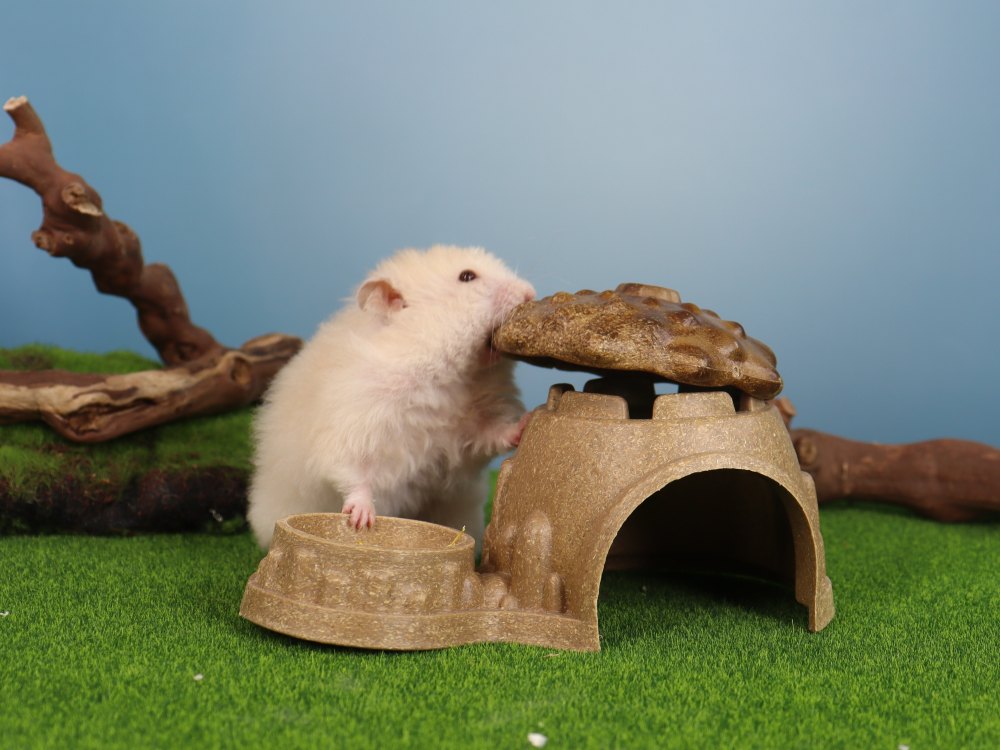
Looking for something even better? TEEWY hideout for small rodents is crafted from 100% edible, pet-safe natural grasses, vegetables, and fruits. It’s not just a house – it doubles as a boredom breaker, satisfying your hamster’s natural chewing and hiding instincts all in one. When they nibble, they’re safe. When they hide, they’re happy and relaxed.
Size – Cozy, Not Cramped
Your hamster should be able to turn around inside, lie flat, and stand up. A house that’s too large feels unsafe; too small causes stress. The entrance hole should be snug enough to feel secure.
Design – Think Like a Burrow
Multi-chamber wooden houses are gold-standard. They mimic real burrows with separate areas for sleeping, food storage, and waste. Look for a removable roof – this lets you check on your hamster without lifting the whole house and disturbing their nest.
Placement – Where to Put It
Place the house in a quiet corner of the cage – away from wheels, water bottles, and cage doors. Then pile 6–10 inches of paper or aspen bedding over and around it. Your hamster will tunnel down to the entrance, just like in nature. Never put the house under direct light or drafts.
Safety – Final Checks
Make sure there are no sharp edges or splinters. Avoid harmful chemicals and metals including glue, staples, or varnish. The roof should sit securely (not crushable). If using wood, check regularly for urine soaking – replace or clean as needed. Always provide at least two hides in the cage so your hamster has options.
A natural, well-chosen house isn’t just decor – it’s the cornerstone of a happy, healthy hamster. Choose wisely, and watch your little friend relax, burrow, and thrive.
 Italian
  English
  French
  Spanish
  Japanese
  Korean
  German
  Polish
  Greek
Greek  Indonesian
  Portuguese